Friday, November 21, 2025

Let Her Cook: Black Foremothers Seizing Destiny

 African American Women's History to 1940


Never gave a damn, I ain't never gave no f***

Fell out with them hoes, we ain't never makin' up

Back for everything I ever lost, I'm on a mission

We turned the whole house into a booth, we in the kitchen

Uh, let her cook


At the beginning of the semester, I was given a selection of folders from the Trinity University Archives with which I would learn how to develop finding aids and other archival tools. The folder I chose was entitled “African American Women’s History to 1940.” I found it interesting that there was no beginning date and dove into the collection to determine a better idea of when African American women’s history should begin. The question is an interesting one that could be explored all on its own, but alas we’d never make to 1940. It’s this author’s opinion that we should begin with one of the oldest institutional mentions of negro women.


In 1662, Virginia legislators passed a law that would serve as the basis for a legal doctrine known as partus sequitur ventrem or “the birth follows the womb,” referring to the fact that a child’s freedom or enslavement hinges on the legal status of their mother. The next act made women’s agricultural labor taxable. These laws illustrate the inherently political existence of black women in America as chattel expected to enrich others with their reproductive and physical labor by societal and systemic design. Sojourner Truth’s 1851 question “Ain’t I a woman?” becomes more pointed with this knowledge in mind. After almost two centuries of institutionalized degradation and humiliation, black womanhood was more of a foil for the cult of True Womanhood than a parallel feminine experience. When one’s very identity precludes them from all the supposed privileges of femininity one learns to disregard those norms and define womanhood on one’s own terms…

“Never gave a damn, I ain't never gave no f***”



When your identity is an affront to polite society and your freedom is a crime, there’s no need to hold anything back. African American women resisted enslavement in great and small ways. Some sabotaged equipment to slow work down, many others employed  lawsuits, while others deprived “owners” of their property by absconding, even with their children. Harriet Tubman, another figure from the collection, put her body on the line to resist slavery at every turn. Her fainting spells were a result of taking a blow meant for another. Her self-emancipation did not end with her personal freedom. Even after she assisted her family members, she was persuaded to continue ferrying passengers along the Underground Railroad. When the Civil War broke out, she led a raid into the South Carolina low country. Tubman wasn’t the only woman whose circumstances forced her to move and live boldly. The collection also contained a few copies of articles about the Edmonson sisters. At 15 and 13 years old they became public figures when the largest recorded escape attempt was sparked by their desperate bid to escape being sold to a New Orleans brothel. The operation was unsuccessful due to a combination of foul weather and fouler betrayal. The escape made local and national news and mobilized the abolitionist community to raise funds to secure their freedom. The sisters joined the abolitionist movement and never stopped working for the betterment of others. The women of this collection where just like many other invisible aunties and mothers whose work was completed with the quiet confidence born of necessity and resilience. Resilience became a cornerstone of black womanhood as the manifold challenges of emancipation gave way to the hellscape of Jim Crow.

"Back for everything I ever lost, I'm on a mission."

            Black women continued to labor for social uplift on all fronts. In education women like Mary McLeod Bethune taught and founded schools contributed to the largest literacy boom int the country. Women like Ida B. Wells fought for their voices and visibility in the Women’s Suffrage movement. Community organizations like Mary Church Terrell’s women’s clubs worked on the front line to provide safe spaces for social gatherings and community service. Their work was rarely singular. Wells is more known for her prolific anti-lynching journalism than her resistance to segregation at suffragette marches. Bethune also consulted with the UN to help draft its charter guaranteeing respect for human rights. From the darkest night of slavery to the nebulous dawn under the clouds of Jim Crow, our African American foremothers modelled what they couldn't teach: self-definition, resistance, and resilience.

"If the first woman God ever made was strong enough to turn the world upside down all alone, these women together ought to be able to turn it back , and get it right side up again! And now they is asking to do it, the men better let them." - Sojourner Truth



Friday, November 29, 2024

wacced out reality

 If you haven't realized by now, my study playlist has heavily featured Kendrick Lamar this semester. In the opening song of his latest album, Lamar raps

It's a lot of opinions, but no power to carry it
2025, they're still movin' on some scary shit.*
*movin' on scary shit = being motivated by fear or acting in a cowardly manner in AAVE

 
Yes, I know this is from squabble up but the visual fits the pensive mood.

Though the artist is referring to people who are spectating but ultimately uninvolved with his controversial beef with a popular Canadian celebrity, this can also adequately sum up the reception of an Open Letter to the UN Secretary-General and President of the World Bank, published in July 2023, and its aftermath. It was co-authored by two economists and signed by over 200 notable people including fellow economists, educators, diplomats, and even current and former heads of state. The Guardian's Larry Elliott sets the scene pretty well. Here's a direct quote from the letter itself that describes the heart of the issue:

We know that high inequality undermines all our social and environmental goals. The 2006 World Development Report, as well as multiple other studies, have shown that extreme inequality of the kind we are observing today has a destructive effect on society. It corrodes our politics, destroys trust, hamstrings our collective economic prosperity and weakens multilateralism. We also know that without a sharp reduction in inequality, the twin goals of ending poverty and preventing climate breakdown will be in clear conflict.

 In the year since the publishing of the letter there has been negligible movement. The World Bank Shared Prosperity overview still declares "Improvements in Shared Prosperity have Stalled" as of October 2024. The UN reports a similarly bleak outlook for Sustainable Development Goal 10 (SDG10). Even more discouraging is the lack of improvement in the quality of data collected and analyzed to measure inequality since it was highlighted as a weak point. The infographic below paints a vague yet discouraging picture. 


Despite the production of colorful reports and political theater proclaiming the need for multilateral cooperation to meet the SDGs it seems that no one in the international community has the power to enact or enforce meaningful change. It's almost as if no one is in charge. With 2024 swiftly drawing to a close, it's safe to forecast that SDG10 will not be met in the remaining 5 years. Whether the cause is ineptitude, conflicting interests, hesitancy to relinquish the status quo, or negligence, the mounting inequality may well preclude meeting the goal beyond the next UN Sustainable Development Summit. 

It's a lot of opinions, but no power to carry it
2025, they're still movin' on some scary shit.

 Indeed, there are many who would prescribe solutions to this international crisis of inequality while abdicating responsibility due to alleged impotence. However, nothing will be accomplished until power is appropriately leveraged where it can be exercised. My hope is that the people who were unaware of the international implications of inequality are inspired to organize. At this point it seems that only grassroots movements will move the needle since they're the only ones with the productive combination of numbers, power, and conviction.

It seems like only marginalized communities will save marginalized communities.


Sunday, November 17, 2024

When Privilege Speaks of Inequality

     For those who do not daily walk an existential tightrope, it is easy to discuss inequality as an important yet abstract issue with no sense of urgency. It is my position that equality is more than an institutional question and cannot be divorced from ethical and moral implications. Mount's article on Five Types of Inequality is framed by privilege and tinged with disdain. His background, being a member of the esteemed Number Ten Policy Unit which directly advises the British Prime Minister, also presents the impetus to read more critically. One who benefits from the maintenance of inequality is hardly positioned to critique those so disadvantaged or offer solutions. On the other hand, it is nice to hear an acknowledgement of things many people experiencing inequality are gaslighted about. Here are my impressions on Mount's 5 Types of Inequality:

  1. Political equality - Defective equality is still equality. Western civilization has been working up to it for over a two millennia. Things are so much better than antiquity.
  2. Outcome equality - Equality is oppression if you have to force people to give up their privileges and advantages. Don't let it threaten your liberty.
  3. Equal Opportunity - Don't focus on the wage gaps, focus on the fact that it's possible for anyone to make inordinate sums of money.
  4. Equal Treatment - Correcting inequality is inequality, because the state has to use unequal treatment to fix unequal treatment.
  5. Equal membership - Assimilation is the answer. Be more British and play up old traditional values to be accepted so that everyone can feel equal.
A GIF from Kendrick Lamar's "Not Like Us" music video where he says "1 2 3 4 5 plus 5"
Kendrick Lamar's lyric refers to the fact that he has much more unreleased music than anticipated.
It's used here to indicate that there are likewise many more types of equality that could be enumerated.


    If equality were so highly valued in the West, there would be no valid obstacles or impediments to achieving such a lofty goal. It's natural for people to be hesitant to relinquish their advantages, but Mount's dismissal of restorative action on behalf of the state is an unsubtle argument on behalf of those with much to lose. There would likewise be no exclusion of equality from comparative macroeconomic studies like those that won this year's Nobel prize.
"Rather than asking whether colonialism is good or bad, we note that different colonial strategies have led to different institutional patterns that have persisted over time," Dr. Acemoglu said during a news conference after the prize was announced.
Peter Dinklage looks on unsmiling while surrounded by applause
Picture me unimpressed.

    Again, institutional equality cannot and should not be divorced from its ethical and moral implications. Awarding such a high prize to a study on the economic outcomes of colonial legacies is like awarding chemists for their pioneering research on the efficacy of biological weapons, especially when the ethical component is totally omitted. The celebration of such accomplishments rings hollow to those whose "benefit" has been death and destruction. 
According to the researchers, prosperity today is partly a legacy of how a nation's institutions evolved over time -- which they studied by looking at what happened to countries during European colonization.

Countries with "inclusive" institutions that protected personal property rights and allowed for widespread economic participation tended to end up on a pathway to longer-term prosperity. Those that had what the researchers called "extractive" institutions -- ones that helped elites to maintain control, but which gave workers little hope of sharing in the wealth -- merely provided short-term gains for the people in power.
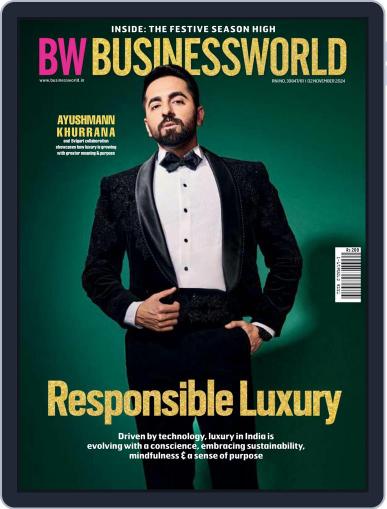
    After reading these perspectives I gather that equality is not a core principle of the West, hypocrisy is. Otherwise, there would be no need to immediately redefine or modify the concept. The perspectives and experiences of colonized peoples would be equally valuable to these types of academic conversations without the need to center the West. Minhaz Merchant also called this out in his article from BW BUSINESSWORLD
Wow, there are publications outside mainstream Western media? Who knew?!
The understated message of the work of the three 2024 Nobel laureates is this: if you want to build prosperous, inclusive societies, colonise geographies like North America, South America, Australia and New Zealand. Their Native populations are too few and too weak to resist you. Meanwhile, in populated ancient civilisations like India, engage in “extractive” colonisation, exploiting the poor and co-opting the elite for as long as such extractive policies are possible. The outcome: poverty and undemocratic postcolonial institutions. These are evident even today in former European colonies across Africa, South America and Asia.

     Whether the state governments are monarchical or democratic, whether considering economic or social development, paradigms descended from colonial influence will have institutional and structural inequality to correct. Furthermore, the centering of European and colonized countries marginalizes those relegated to the global periphery. As long as the voices being amplified are those in favor of an unequal status quo, the West should abstain from its claims that equality is a core value. After all, it is steeped in a pride and privilege which cannot be reconciled with true equality.

“When you're accustomed to privilege, equality feels like oppression."
                                                                                                            -Anonymous


Wednesday, November 6, 2024

Post-Election Reflection

     As one who has studied (and found wanting) the American political process, I am disappointed, but not surprised at the 2024 electoral outcome. So many things have to go right for the average candidate to win that it's not really a stretch for a latecomer who's neither white, nor a man to lose a race that was already in progress.

Photo credit: Anna E. Photo

     Unlike many of my peers, I decided to take time to process the emotional reactions stirred by the reelection of one very hairy orange (let's call him "OVHO" for short) and I honestly wish more content creators, commentators and pundits had done the same. It seems that the hastily and loosely assembled coalition for Harris-Walz is imploding faster than a sand castle at high tide. 


     First, democrats seem to have forgone legal challenges to questionable election practices across the country in favor of remaining gracious and respectable. Examples gleaned from casual timeline scrolling include refusal to count absentee ballots due to obscure local or statue statutes (that somehow supersede federal laws), last-minute court rulings, purposeful misinformation about polling policies and eligibility, and the infamous ballot box burnings. If democracy is truly the priority, these accusations would warrant some kind of scrutiny and conversation.

     Second, public discourse is fixated on who to blame for the startling loss. One thing I noticed while double-checking these narratives is that many are coming from conservative mouths. It seems the legacy media has once again rushed to bend the knee. It's concerning that there are so many questions about legitimacy at the civilian level while those things are seemingly ignored by party leaders due to a commitment to being better than OVHO's supporters. As an aside, the black politics specialist in me DETESTS respectability politics and wishes the practices would be added to the lists of things killed by millennials but I'll save the rest of that tirade for another post.

Photo credit: Anna E. Photo

     Furthermore, there's a deep exhaustion that has set in due to the inescapability of this election cycle. Each year organizers find new, more intrusive ways to "energize their bases." This year, there's a running joke was about the frequency of text messages requesting campaign donations. (Reply "STOP" to opt out by the way.) Add that to a 24-hr news cycle, breaking news app alerts, and social media saturation and the voters are beyond ready for things to return to business as usual. So after a long uphill battle with a finish line in sight, the extension of said goal has left many ready to lay down and accept defeat.

     In conclusion, the jury is still out on whether the People will choose to accept the election results, but the rank and file actors in the American political theater have already drawn the curtains and bowed.


Thursday, October 31, 2024

Surprise! Unsustainable ideals yield unsustainable realities


The delusion of perpetual growth is hard for neoliberalists to relinquish. Economic analysts often point to a season in time where everything was going according to plan, until one stiff breeze brought down the entire house of cards.


The Economist opens their article with a nod to the growth initiated by the Industrial Revolution in developed countries, a trend that only just ended in 1995 according to them. If you found the use of the word "delusion" too harsh, I'd offer this quote:

"Globalisation’s critics will tell you that capitalism’s excesses and the global financial crisis should define this era. They are wrong. It was defined by its miracles."


I surmise these "miracles" are due to the massive wealth transfers carried out under the guise of free trade and I think it is disingenuous to celebrate all the benefits of liberalism without addressing the shortcuts (e.g. human rights violations, unchecked pollution) taken to achieve such remarkable dividends. The fact that a lot of these shortcuts have been outlawed, or are at least frowned upon, in the present day says a lot about the true viability of classical development models. Furthermore, setting aside the utter hypocrisy of denouncing lucrative but obsolete practices on moral grounds, its genuinely nonsensical to ignore the cyclical pattern of economic crises. Mark Fisher describes the boom and bust cycle, and its consequential mental disorders, thusly, "With its ceaseless boom and bust cycles, capitalism is itself fundamentally and irreducibly bi-polar, periodically lurching between hyped-up mania (the irrational exuberance of 'bubble thinking') and depressive come-down. (The term 'economic depression' is no accident, of course)." Though the term irrational exuberance is typically applied to 1990s investors, I'd submit that all defenders of the market economy exhibit the trait.

"To judge what has gone wrong, first ask what previously went right."

Again, a tunnel vision approach to the free market does not preclude the harm done in pursuit of economic expansion. It is theorized that new countries entering the world economy will experience a catch-up effect where initial growth is explosive because they will experience higher returns from investment. However, the resultant cultural, ecological, and social disruptions remain unacknowledged. One of the biggest challenges to forming development theories is the failure to take nonmonetary factors into account.

The failure of catch-up theory is being disproven as growth in developing countries has begun to stall and reverse much more rapidly than in developed countries. Rather than digging more deeply into the specific causes for the breakdown, the author sticks to the common rhetoric that implies that poor countries choose poverty. "It should not be a surprise that development has stalled as governments have increasingly rejected the principles that powered a golden era. Nobody will suffer more as a result than the world’s poor." I can't agree more with the latter statement. As has historically been the case, the people at the margins of the global economy often contribute the most and receive the least in return. As long as development continues to overlook the human element as people, with their own individualized definitions of well-being and not variables to be analyzed, models will continue to fail.

Let Her Cook: Black Foremothers Seizing Destiny

 African American Women's History to 1940 Never gave a damn, I ain't never gave no f*** Fell out with them hoes, we ain't never ...