African American Women's History to 1940
Never gave a damn, I ain't never gave no f***
Fell out with them hoes, we ain't never makin' up
Back for everything I ever lost, I'm on a mission
We turned the whole house into a booth, we in the kitchen
Uh, let her cook
At the beginning of the semester, I was given a selection of
folders from the Trinity University Archives with which I would learn how to develop
finding aids and other archival tools. The folder I chose was entitled “African
American Women’s History to 1940.” I found it interesting that there was no
beginning date and dove into the collection to determine a better idea of when
African American women’s history should begin. The question is an interesting one
that could be explored all on its own, but alas we’d never make to 1940. It’s
this author’s opinion that we should begin with one of the oldest institutional
mentions of negro women.

In 1662, Virginia legislators passed a law that would serve
as the basis for a legal
doctrine known as partus sequitur ventrem or “the birth follows the
womb,” referring to the fact that a child’s freedom or enslavement hinges on
the legal status of their mother. The next act made women’s agricultural labor
taxable. These laws illustrate the inherently political existence of black
women in America as chattel expected to enrich others with their reproductive
and physical labor by societal and systemic design. Sojourner Truth’s 1851 question
“Ain’t I a woman?” becomes more pointed with this knowledge in mind. After almost
two centuries of institutionalized degradation and humiliation, black womanhood
was more of a foil for the cult of True Womanhood than a parallel feminine
experience. When one’s very identity precludes them from all the supposed privileges
of femininity one learns to disregard those norms and define womanhood on one’s
own terms…
“Never gave a
damn, I ain't never gave no f***”
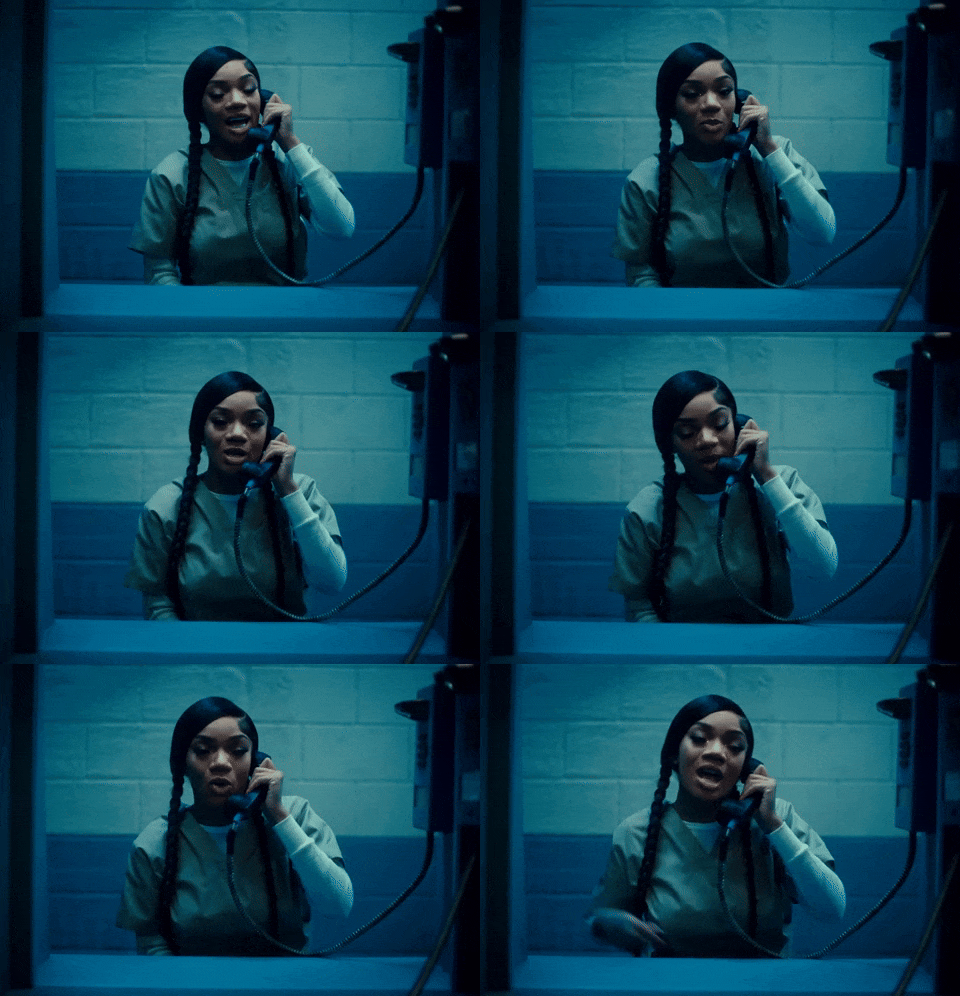
When
your identity is an affront to polite society and your freedom is a crime, there’s no need to
hold anything back. African American women resisted enslavement in great and
small ways. Some sabotaged equipment to slow work down, many others employed lawsuits,
while others deprived “owners” of their property by absconding,
even with
their children. Harriet Tubman, another figure from the collection, put her
body on the line to resist slavery at every turn. Her fainting spells were a
result of taking a blow meant for another. Her self-emancipation did not end
with her personal freedom. Even after she assisted her family members, she was persuaded
to continue ferrying passengers along the Underground Railroad. When the Civil
War broke out, she led
a raid into the South
Carolina low country. Tubman wasn’t the only woman whose circumstances
forced her to move and live boldly. The collection also contained a few copies
of articles about the Edmonson
sisters. At 15 and 13 years old they became public figures when the largest
recorded escape attempt was sparked by their desperate bid to escape being
sold to a New Orleans brothel. The operation was unsuccessful due to a combination
of foul weather and fouler betrayal. The escape made local and national news and
mobilized the abolitionist community to raise funds to secure their freedom. The
sisters joined the abolitionist movement and never stopped working for the
betterment of others. The women of this collection where just like many other
invisible aunties and mothers whose work was completed with the quiet
confidence born of necessity and resilience. Resilience became a cornerstone of
black womanhood as the manifold challenges of emancipation gave way to the hellscape
of Jim Crow.
"Back for everything I ever lost, I'm on a mission."
Black women
continued to labor for social uplift on all fronts. In education women like Mary
McLeod Bethune taught and founded schools contributed to the largest
literacy boom int the country. Women like Ida
B. Wells fought for their voices and visibility in the Women’s Suffrage
movement. Community organizations like Mary
Church Terrell’s women’s clubs
worked on the front line to provide safe spaces for social gatherings and
community service. Their work was rarely singular. Wells is more known for her
prolific anti-lynching journalism than her resistance to segregation at
suffragette marches. Bethune also consulted with the UN to help draft its
charter guaranteeing respect for human rights. From the darkest night of slavery to the nebulous dawn under the clouds of Jim Crow, our African American foremothers modelled what they couldn't teach: self-definition, resistance, and resilience.
"If the first woman God ever made was strong enough to turn the world upside down all alone, these women together ought to be able to turn it back , and get it right side up again! And now they is asking to do it, the men better let them." - Sojourner Truth




No comments:
Post a Comment
No lurking allowed. Engage!